
Technical Engineering Notebook · 10 Production Playbooks

Agentic AI & Systems Architecture

Deep architectural breakdowns by a Senior AI/LLM Engineer with 5+ years building production AI systems and scalable Python backends. Exploring multi-agent orchestration, hybrid RAG, tool-enabled agents, guardrails, and evaluation frameworks.

Abstract futuristic visualization of interconnected autonomous agent networks★ Featured Deep-Dive
Multi-Agent Systems•Oct 2026•9 min read

Architecting Multi-Agent Systems in Production: Supervisor vs Peer-to-Peer Orchestration with LangGraph

Single LLM agents struggle with context window pollution and hallucination cascades when tasks exceed 5-10 reasoning steps. Here is how we architect production multi-agent systems using supervisor-worker patterns, typed shared state, and deterministic cyclic graphs.

✓Decomposing monolith prompts into specialized sub-agents reduces reasoning failures by over 68%.
✓The Supervisor pattern provides strict convergence guarantees, preventing infinite back-and-forth loops.
Read Full Architecture Playbook →Task Success Rate: 94.2%
Abstract futuristic visualization of interconnected autonomous agent networksMulti-Agent SystemsOct 20269 min read
#Multi-Agent#LangGraph#Agent Orchestration

Architecting Multi-Agent Systems in Production: Supervisor vs Peer-to-Peer Orchestration with LangGraph

Single LLM agents struggle with context window pollution and hallucination cascades when tasks exceed 5-10 reasoning steps. Here is how we architect production multi-agent systems using supervisor-worker patterns, typed shared state, and deterministic cyclic graphs.

94.2%
Task Success Rate
-60%
Context Reduction
Read Playbook→4 Takeaways
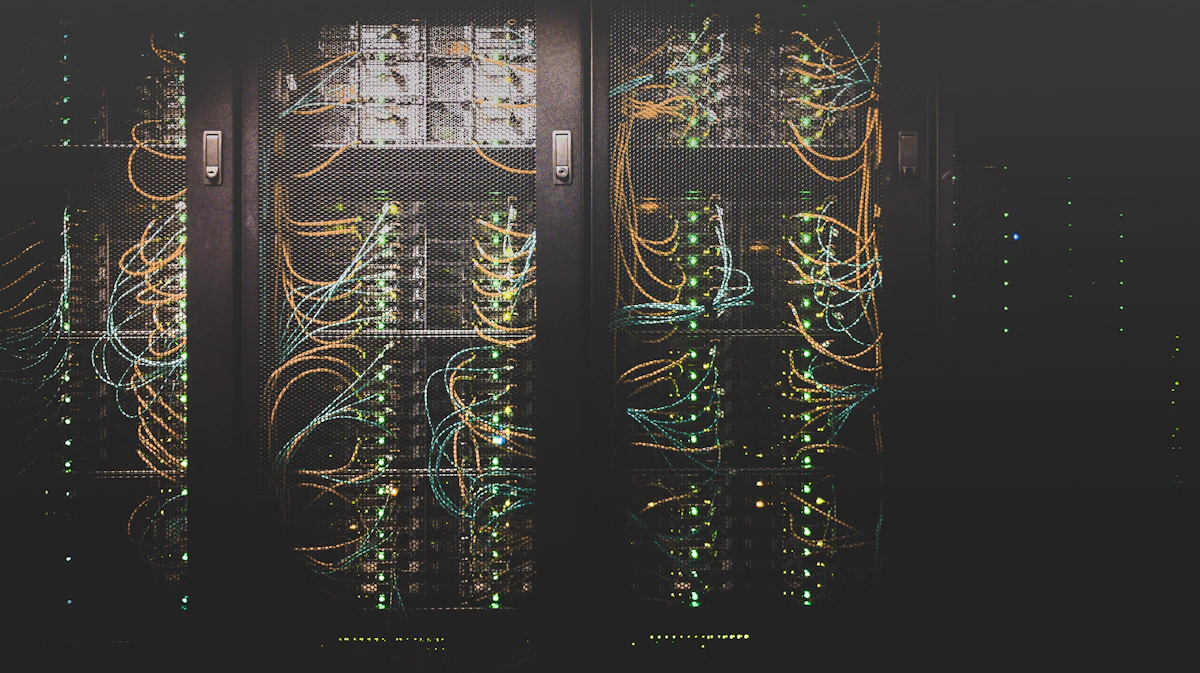
High performance database server infrastructure and dense networking racksAdvanced RAGOct 202610 min read
#RAG#Hybrid Search#BM25

Beyond Naive RAG: Building Production Hybrid Retrieval with Dense Vectors, BM25, and Cross-Encoder Rerankers

Pure vector search fails when queries contain exact product SKUs, code identifiers, or acronyms. We dive deep into Reciprocal Rank Fusion (RRF), Cross-Encoder reranking, and chunking heuristics that achieve 96%+ context precision.

97.4%
Context Recall
91.8%
Context Precision
Read Playbook→4 Takeaways
Matrix code and secure data terminal representing safe software executionTool Calling & AgentsSep 20268 min read
#Tool Calling#Pydantic V2#FastAPI

Building Fail-Safe Tool-Enabled Agents: Pydantic Schema Enforcement, Sandboxed Execution, and Error Recovery

LLM tool calling is fundamentally probabilistic. When an agent emits malformed arguments or calls destructive APIs in a blind loop, systems fail. Here is our blueprint for deterministic schema validation, self-correcting retries, and isolation.

99.1%
Tool Call Accuracy
88.5%
Self-Correction Rate
Read Playbook→4 Takeaways
High-speed fiber optic networks and enterprise cloud routing backbonesLLM ArchitectureSep 20268 min read
#LiteLLM#Gateway Architecture#Fault Tolerance

Provider-Agnostic LLM Architecture: High-Availability Routing, Fallbacks, and Rate-Limit Resiliency

Hardcoding vendor SDKs creates single points of failure and vendor lock-in. We explain how to architect a production LLM gateway featuring automated model fallback, latency-based load balancing, and unified token telemetry.

99.99%
Uptime SLA
<180ms
Failover Latency
Read Playbook→4 Takeaways
Data analytics metrics dashboard showing quantitative evaluation scoresAI Evals & TestingAug 20269 min read
#AI Evals#Ragas#LLM-as-a-Judge

Engineering AI Evaluation Frameworks: Continuous Benchmarking with LLM-as-a-Judge and Ragas in CI/CD

How do you know if your prompt update, chunking tweak, or model upgrade actually improved your AI application? We examine how to build CI/CD evaluation pipelines using Ragas, TruLens, and deterministic rubric judges.

94.8%
Evaluation Precision
4.2 min
CI Pipeline Duration
Read Playbook→4 Takeaways
Cybersecurity shield lock concept representing enterprise AI guardrailsGuardrails & SecurityAug 20269 min read
#AI Security#Guardrails#NeMo Guardrails

Production Guardrails: Defending Against Indirect Prompt Injection, Jailbreaks, and PII Leaks

When agents read external websites, parse customer emails, or ingest user uploads, they become vulnerable to indirect prompt injection. We outline a defense-in-depth security architecture that protects data integrity without degrading model utility.

99.8%
Injection Block Rate
0.00%
PII Leakage Rate
Read Playbook→4 Takeaways
Software developer monitoring real-time server logs and telemetryObservability & MLOpsJul 20268 min read
#Observability#OpenTelemetry#Langfuse

Observability for Autonomous Agents: Step-Level Tracing, Token Economics, and Latency Profiling

Debugging multi-agent systems without distributed tracing is impossible. We break down how to implement step-level traces, measure granular cost attribution per user session, and detect pathological looping behaviors.

100% Steps
Trace Resolution
42%
Cost Savings Identified
Read Playbook→4 Takeaways
Silicon wafer circuitry representing precision engineering and regression testingAI Evals & TestingJul 20269 min read
#Regression Testing#Golden Datasets#Pytest

Regression Testing for Non-Deterministic AI: Golden Datasets, Semantic Assertions, and Drift Detection

Traditional software testing relies on exact assertions: assert output == expected. But LLMs are non-deterministic. We explore how to implement semantic distance thresholds, statistical assertions, and golden snapshot testing.

450 Tests
Test Suite Size
<1.2%
False Alarm Rate
Read Playbook→4 Takeaways
High-performance cloud server architecture representing scalable Python backendsScalable BackendsJun 20269 min read
#FastAPI#Async Python#Celery

High-Throughput Python Backends for AI: Async FastAPI, Streaming SSE, Celery Queues, and WebSockets

LLM responses take seconds, not milliseconds. Holding synchronous worker threads open while tokens stream will exhaust server resources. Here is how we scale asynchronous Python backends for production AI systems.

10K+
Concurrent Streams
<240ms
p99 TTFT
Read Playbook→4 Takeaways
Microscopic neural pathway network representing long-term AI memory architecturesMulti-Agent SystemsJun 20269 min read
#Agent Memory#Episodic Memory#Vector Search

Hierarchical Memory Architectures for Production Agents: Working, Episodic, and Semantic Memory

Dumping the entire conversation history into an LLM prompt burns tokens and degrades reasoning. We look at human cognitive memory models—Working, Episodic, and Semantic—and how to implement them in production agents.

+74%
Token Efficiency
96.2%
Long-term Recall
Read Playbook→4 Takeaways